The Hidden Virus in Modern Football
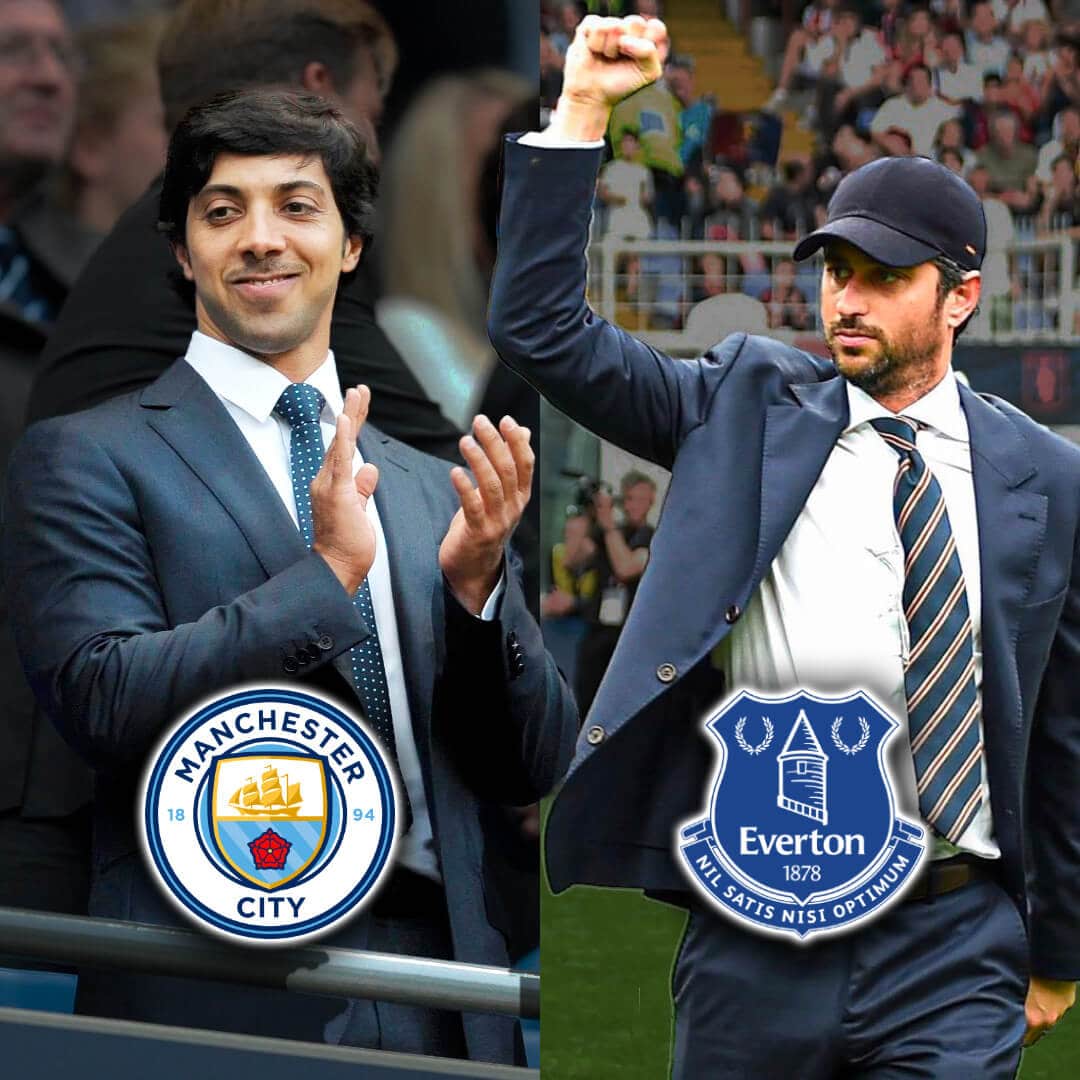
When Sheikh Mansour completed his takeover of Manchester City in 2008, few could have predicted how the next few years would unfold. He wasn’t the first and he certainly isn’t the last to take majority ownership of a top-flight football club and promise intent, ambition and glory. In a letter penned to City supporters following his 90% acquisition (he bought the remaining 10% almost a year later) he told the fans:
“We are ambitious for the club, like you, but not unreasonably so and we understand it takes time to build a team capable of sustaining a presence in the top four of the Premier League and winning European honours.”
Perhaps City’s Champions League triumph came a few years later than anticipated but The Abu Dhabi United Group’s acquisition of Man City is surely the most successful takeover in modern history. When it comes to City, it always feels like there’s a contingency plan in place - nothing can faze them. Losing your record goal-scorer? Sign the most prolific centre-forward on the market. Defeat in the 2021 Champions League Final? Here’s an unprecedented treble two years later. 115 financial charges? Water off a duck’s back…
There are billions of reasons the City Football Group operates like a well-oiled machine and oil is just one of them. In the City Football Group, Manchester City feels like the first and simultaneously last piece of a puzzle in which regulations are skirted around, rules are made to be broken, and incestuous transfer dealings are the order of the day.
City Football Group, or ‘CFG’, wasn’t born until 5 years after Mansour bought Manchester City. Again, City weren’t the first Premier League club to be involved in a multi-club model but they are part of the most successful group. CFG owns or part-owns 13 clubs across the world, spread across 5 continents, a concept which was supposedly dreamt up by CEO Ferran Sorriano during his time at Barcelona.
CFG doesn’t hide the fact that City is the flagship club within the group, with players of sister clubs ultimately vying for the opportunity to transfer to the European Champions. So how does that affect those smaller teams, knowing your players will be cherry-picked by the best football team in Europe the second they show some quality?
The scary thing is, having your most prestigious talent snatched away is the best-case scenario in these multi-group models. Money, as we know, doesn’t guarantee success. Take Everton for example. Since billionaire Farhad Moshiri’s initial 49.9% purchase in 2016, Everton have spent over £740m on signings and now face an annual relegation battle. A prospect which hasn’t been realised (yet) but seems to get closer every year. Perhaps another takeover will help?...
777 Partners is the name being bandied around Merseyside but the blue-nosed Scousers should err on the side of caution rather than excitement. This is an ‘investment company’ with a highly suspect record both on the pitch and in their extra-curricular endeavours.
The “self-funded” investment company already owns or part-owns 7 different football clubs across 7 different countries. It’s worth exploring how these teams have faired since 777 sunk their claws into them. Notably, the American firm has two relegations on their CV already, whilst their other clubs can be found fighting for their top-flight lives in their respective relegation zones. For example, Hertha BSC were relegated after finishing rock-bottom of the Bundesliga, though 777’s 64.7% acquisition was only finalised two months before the end of said season.
However, on-the-pitch woes make up a fraction of the concerns surrounding the prospective takeover of Everton. 777 Co-Founder, Josh Wander, has a history marred by issues such as payment defaults, racketeering charges, and even allegations of drug trafficking (I'll refrain from making any Merseyside-related quips here).
Owners with a questionable moral compass are par for the course these days, and most fans are willing to accept the moral conundrum in exchange for success. Consequently, arguments between fans online often descend into chaos. At best it involves criticising other fans and the media with allegations of xenophobia, and at worst, complete ignorance or mud-slinging competitions in the name of justification. This sets a horrendous precedent with football fans debating which owners’ crimes are worse. ‘Cleared of all charges, you’ll never sing that.’
Aside from the moral dilemmas, the working man's game is as good as gone already. These investment firms and/or nation-states (!!!) usually sweep in and promise to guide their new side to European competitiveness and sustainability with an afterthought of club values and ‘DNA’. This is the trade-off. Success at the cost of identity. But the twist is, neither are guaranteed…in fact, far from it.
It typically begins with the new owner making assurances that they will honour the club's identity and values, even paying homage to the history of the city and its working-class demographic. However, these pledges usually materialise in the form of an Adidas representative retrofitting a cookie-cutter third kit design (RRP £110). They’ll claim it represents the chimney of a factory from the 19th century which adorns the city’s skyline. To put it more succinctly, as one of my favourite blogs by Sam Diss highlights: ”New kits [are] released with forced narratives that point your eyes to archival design elements that simply are not there.”
Let’s say we can look past the virtue-signalling and marketing drivel. It’s hard to come up with a blanket definition for success in football, especially across different clubs and continents. ‘Progress’ may be the snappiest way of describing what all fans hope to see year-on-year, but in a turbulent Premier League, sometimes ‘progress’ isn’t as tangible as one might think. What would constitute success for Everton over the next 5 years? Breaking into the ‘Big 6’? Highly unlikely. Perhaps competing with the likes of West Ham for a top 8 finish and a second (or third) rate European trophy is more realistic. Although, you’d imagine West Ham plan on pushing on themselves, keeping Everton ever-trailing a few steps behind.
In the utopian version of these multi-club groups, the lower-status clubs benefit from world-class facilities, otherwise unattainable loan players and cash injections at the first sign of trouble. In reality, the clubs and fans are stripped of their identity and star players are ripped away from your favourite team faster than you can print their name on the back of your shirt. Perhaps a regulatory upheaval is in order or at least a more extensive screening process for prospective owners.
WORKS CITED
Wikipedia. “City Football Group.” Wikipedia, https://en.wikipedia.org/wiki/City\_Football\_Group. Accessed 14 September 2023.
Brown, Paul, and Philippe Auclair. “The 777 football mystery.” 2023. Josimar, https://archive.ph/20230704040519/https://josimarfootball.com/2023/07/03/the-777-football-mystery/#selection-565.0-574.0.
Diss, Sam. “Nostalgia in the age of loneliness.” Why Are You Like This?, 2023. Substack, https://samdiss.substack.com/p/nostalgia-in-the-age-of-loneliness.