How Is Social Media Affecting Football Today?
Social media has grown exponentially in popularity since its inception. There are an estimated 4.62 billion social media users as of January 2022 and an average year-on-year growth rate of 12.11% (since 2012) according to smartinsights.com. This has led to a rapid rise in the number of football clubs and players creating accounts across multiple platforms and updating their fans on a daily or even hourly basis.
The proliferation of social media has enabled a whole generation of otherwise irrelevant individuals to voice their opinions and, crucially, enabled their opinions to be heard. Celebrities are cancelled overnight, trends begin in a matter of minutes, and football clubs are forced to listen and act on the latest hot topic. So how does this affect the players?
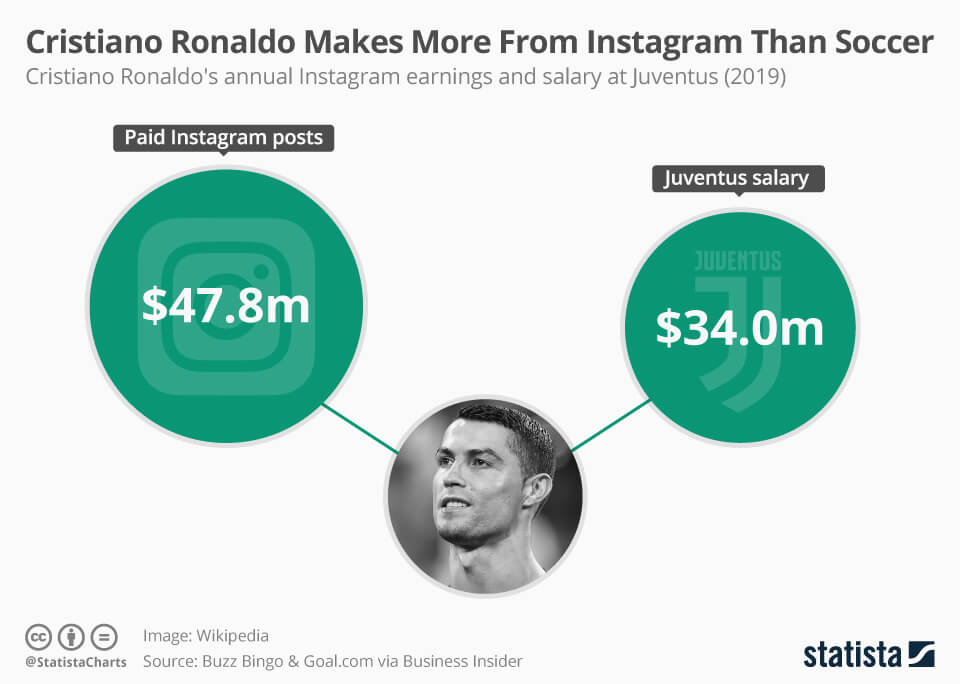
It is well documented that Cristiano Ronaldo earns more money from Instagram than his salary as a player. Does that make him primarily a footballer or an influencer? He has been known to comment on Instagram posts to deny online transfer rumours and some sources have claimed Ten Hag would not block an exit for the player this summer. However, the club’s owners are reportedly reluctant to let their star asset go, with his commercial and online value undoubtedly a key factor in bringing him back to Old Trafford in the first place.
More and more clubs are being forced to consider their next recruit’s social media presence before making a move. Do they have an online presence? How many Instagram followers do they have? Will they bring more followers ($$$) to our pages? Not only are the figures examined, but transfers have been known to begin and end(!) due to social media. Most recently and remarkably, Manchester United allegedly pulled out of a deal for Marko Arnautovic, citing complaints from fans as a contributing factor.
Clubs have started implementing PR training sessions to ensure their players align with their ‘tone of voice’ and many players choose to hire agencies to run their pages, to relieve the headache of regular updates and fear of being cancelled. What we fans are left with is a load of diplomatic PR cliches spouted by our club captains and MOTMs every week and Instagram apologies after a loss - usually copied and pasted from Marcus Rashford’s Notes app. Why can’t football join the trend of cocky Twitter admins that we see in the corporate world? (Although, admittedly, that is starting to wear thin too).
The more malicious side of the same coin is the online abuse that players are known to receive. Death threats, racial abuse and homophobia are frequent themes across ‘football Twitter’ and private Instagram messages. As recently as today, Joachim Andersen said he was sent up to four hundred messages of abuse, including death threats, following his game against Liverpool. The reality is, there has never been a time in history when high-status individuals could be targeted as easily and frequently as they are today.
Even if we go back just ten years, Premier League stars did not receive the same volume of ruthless, sadistic direct messages. There is a new generation of footballers who will have their whole careers plagued by social media, and the effects have not yet had time to play out. We can speculate that Dele Alli has not reached his potential due to the torrent of online abuse he receives, or that Marcus Rashford has not replicated his pre-Euro 2020 form due to the abhorrent racism he, Jadon Sancho and Bakayo Saka suffered, but we can’t say for sure how it affects the players on a permanent basis.
One thing is certain, the footballing powers that be will make sure they can profit from it.